

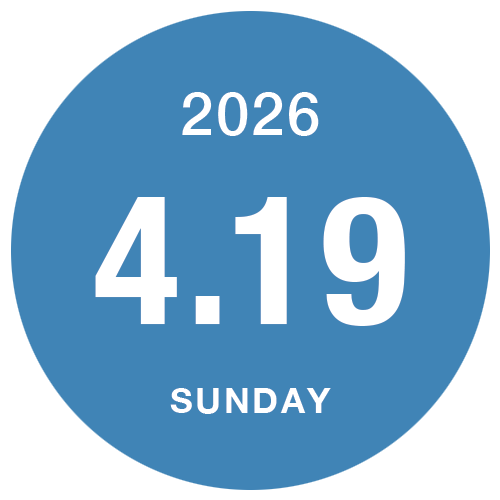
April 19 (Sun) 10:00 AM
EASE Program — Online Study Session
The New School for Social Research (NY), Center for Global Mental Health Professor Adam Brown
Learning "EASE" — a WHO/UNICEF jointly developed program for preventive emotional regulation in adolescents
[Event Details]
Date & Time: Sunday, April 19, 2026, 10:00 AM-11:30 AM (JST)
Saturday, April 18, 2026, 9:00 PM-10:30 PM (ET)
Format: Online (Zoom)
Language: English (with Japanese subtitles; interpretation support for the Q&A session)
Capacity: 20 participants (invitation-only)
[Participants]
This session is primarily intended for:
Researchers in education, psychology, and cognitive science
Practitioners engaged in supporting children, youth, and caregivers
[Registration]
Participation Fee: Free of charge.
How to Register: Registration is closed because capacity is reached. Thank you.
Application Deadline: Thursday, April 10
*This session will be conducted by invitation and is limited to 20 participants. Registration will close once capacity is reached.
[Speakers]
Adam Brown, Ph.D.
Professor of Psychology (Clinical), The New School for Social Research
Head of the New School Center for Global Mental Health
Adam Brown is Professor of Psychology at The New School for Social Research. He has extensive experience developing programs to promote mental health awareness, providing trainings, technical guidance, and support in the creation, implementation, and evaluation of scalable, evidence-based strategies that can be delivered in a wide range of contexts by non-specialists.
Tina Xu
Clinical Psychology Doctoral Candidate,
The New School Center for Global Mental Health
Linda Han
Research Associate
The New School Center for Global Mental Health
Organizer: Toi
www.thetoi.org
EASE Program Study Session
Learning from “EASE,” a Preventive Mental Health Program Developed by WHO and UNICEF
[About This Session]
This study session is a learning and dialogue-based session that explores what the preventive mental health program EASE (Early Adolescent Skills for Emotions)—developed by WHO and UNICEF—can offer to preventive mental health research and practice in Japan.
We invite Professor Adam Brown from Center for Global Mental Health, The New School for Social Research (USA), who will introduce the design philosophy of EASE as well as its research and implementation framework, drawing on his experience adapting, implementing and studying EASE in collaboration with community-based organizations in New York City.
Building on these insights, the session aims to generate reflections on how EASE might be meaningfully connected to Japan’s research, practice, and institutional contexts.
Official EASE materials (English): WHO website
https://www.who.int/publications/i/item/9789240082755
[What You Will Learn]
This session will focus on the following topics:
The background of the EASE program and that motivated WHO to develop it
The overall structure of the program and its core principles the rationale and problem awareness
Key perspectives and guiding questions for designing preventive mental health interventions
Insights into how research can be practically linked to educational and support practices across sectors
*Please note: This session is not intended for skill acquisition, nor for evaluating or comparing program effectiveness.
[What is EASE?]
EASE (Early Adolescent Skills for Emotions) is an evidence-based group psychosocial intervention program developed by WHO and UNICEF for early adolescents aged 10–15-year-olds and caregivers. The program consists of ten sessions incorporating elements of Cognitive Behavioral Therapy (CBT).
EASE was designed for implementation in communities exposed to adversity and is characterized by its feasibility in contexts with limited mental health professionals. Importantly, it has been evaluated not only for effectiveness, but also for feasibility, acceptability, and fidelity of implementation.
[Why EASE?]
EASE offers valuable insights for preventive mental health research and practice in Japan. In this session, we will explore EASE from the following perspectives:
1|Design Philosophy
A program design that specifically targets early adolescence
A dual focus on both adolescents and their caregivers
2|Linking Research and Implementation
Program design grounded in realities of limited professional capacity and scarce in- and out-of-school support resources
Evaluation through randomized controlled trials (RCTs), alongside assessments of feasibility, acceptability, and fidelity
3|Implications for the Japanese Contexts
Positioning EASE between universal preventive approaches and clinical interventions
[Session Format]
This session will be conducted as a small-group, closed study session, combining lectures and dialogue. Participants are encouraged to bring their own research interests and questions, and to reflect on EASE in relation to their own research or practice contexts.
Key features of the session:
An overview of the EASE program and its structure
In-depth discussion through dialogue and Q&A with participants
Exploratory conversations without the aim of evaluation or conclusion
Invitation-only, small-group format organized by Toi
This session is intended to build shared understanding prior to any evaluation or judgment.
The following will not be addressed:
Decisions regarding whether EASE should be introduced or implemented in Japan
Comparisons with other programs or assessments of relative effectiveness
Consensus-building or policy recommendations